PetroM Weekly Pulse #013: 33% Crude Collapse – Dangote Slashes PMS to N1,175, Diesel to N1,500
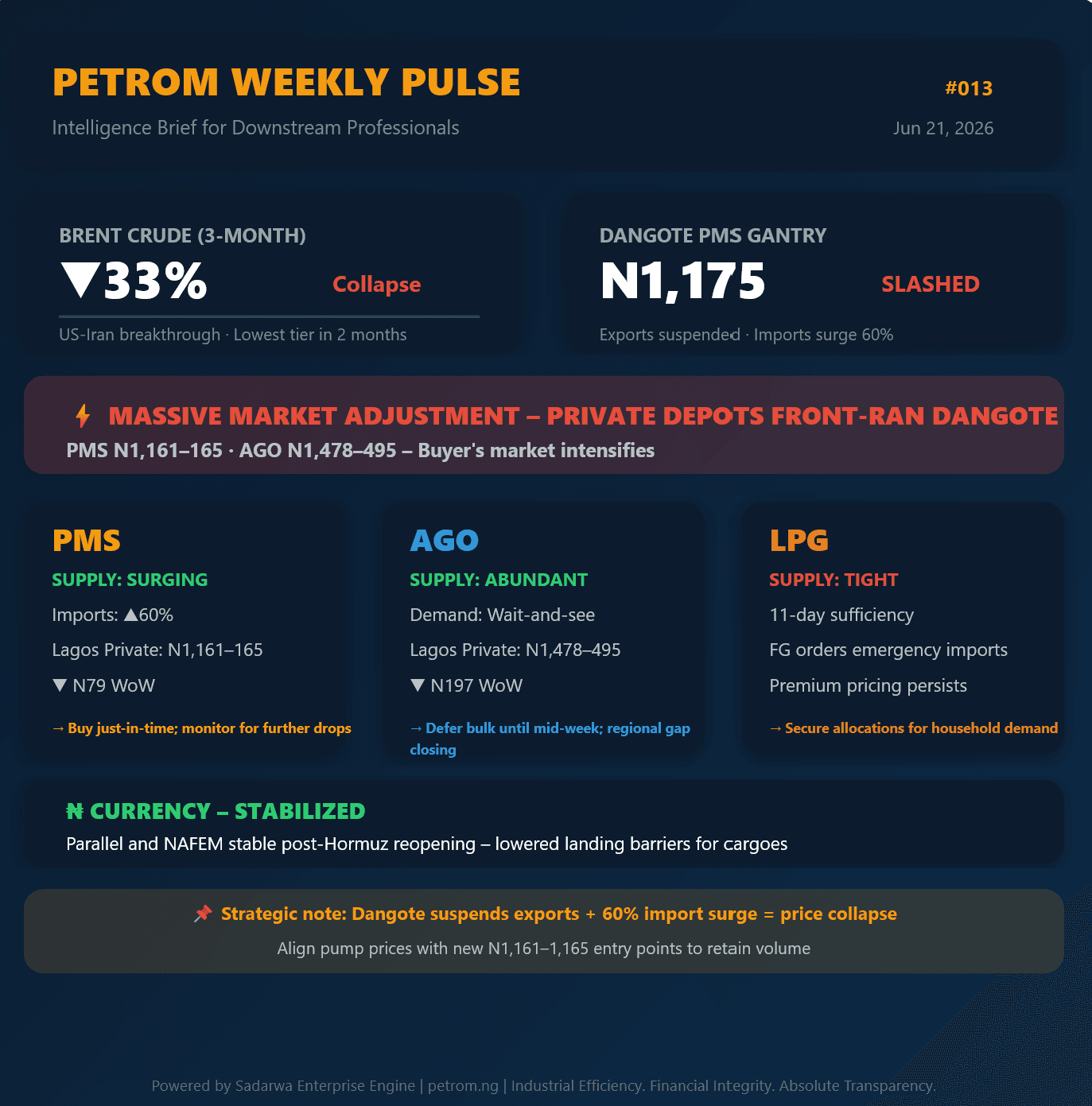
A diplomatic US‑Iran breakthrough triggered a 33% collapse in international crude over the last three months, forcing a dramatic downstream reset. Dangote Refinery slashed its PMS gantry to N1,175/litre and diesel to N1,500/litre, while suspending gasoline exports. Independent private depots front‑ran these changes within hours, creating a fiercely competitive buyer’s market.
PMS – Surging supply, falling prices
Lagos private depots crashed to N1,161–1,165/litre – down N79 week‑on‑week, and already below Dangote’s new benchmark. Daily consumption stands at 47M litres (+6.8%), with imports surging 60%. Calabar N1,187, PHC N1,200. Advice: Buy on a just‑in‑time basis – intense terminal competition suggests spot prices may continue adjusting.
AGO – N197 drop
Diesel collapsed to N1,478–1,495 (down N197), undercutting Dangote’s N1,500 floor. Warri commands a N1,634–1,635 premium (+N140 vs Lagos). Advice: Defer multi‑station replenishment until mid‑week as regional hubs adjust downward to close the gap with Lagos.
LPG – Still tight
Despite 11‑day sufficiency reports, the FG has ordered emergency imports. Terminal supply constraints keep premium pricing in place. Secure prompt allocations to satisfy baseline household cooking demand.
Currency – Stabilized
Hormuz reopening has stabilized parallel and NAFEM tracks, dramatically lowering landing barriers for private cargoes. Avoid holding higher‑cost inventory in this rapidly adjusting market.
Strategic take
Dangote’s export suspension + 60% import surge = total supply optimization. Align pump prices with new N1,161–1,165 coastal entry points to retain customer volume while managing margin exposure.
🔧 Supporting Your Strategy with PetroM
In a week where depot diesel prices adjust by ₦197/litre and petrol by ₦79 across competitive hubs, relying on manual station audits may introduce operational complexity. PetroM's Intelligent Multi-Station Margin Analyzer helps address this by automatically pulling live private terminal pricing and mapping it against current physical dips and sales logs. This visibility can support timely retail pump price calibration—helping maintain competitive positioning while supporting margin awareness relative to actual replacement costs.