PetroM Weekly Pulse #012: ₦279bn Cargoes Crash Ex‑Depot Prices – PMS Below ₦1,250
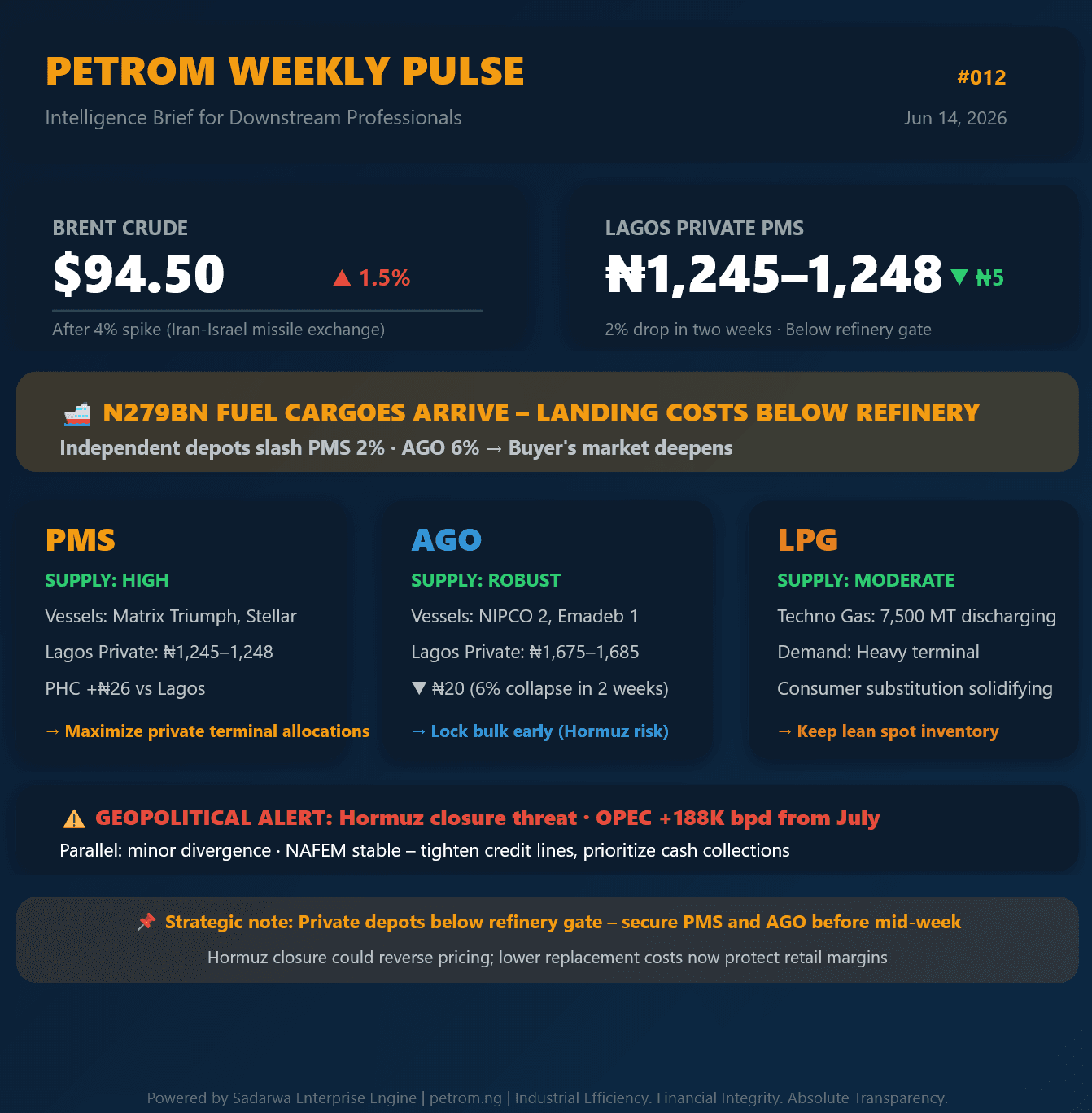
Global crude spiked 4% to $94.50 after an Iran‑Israel missile exchange and Strait of Hormuz closure threats, then settled. But the local story is more compelling: six fuel cargoes worth ₦279 billion arrived, pushing landing costs below refinery templates. Independent depots responded aggressively – PMS dropped over 2% in two weeks to ₦1,245–1,248/litre, and diesel collapsed 6% to ₦1,675–1,685/litre.
PMS – Below refinery gate
Private Lagos terminals (Matrix Triumph, Stellar) now undercut Dangote’s benchmark. PHC commands a +₦26 premium. Retail filling stations are already slashing pump prices to avoid losing truck volume. Advice: Maximize short‑term allocations from private terminals while prices remain aggressively positioned.
AGO – 6% fortnight collapse
Diesel at ₦1,675–1,685 (down ₦20). Warri N1,690, Kano holds a premium. The weekend’s Hormuz closure announcement could introduce upward pressure by mid‑week. Lock in bulk early to protect margins.
LPG – Heavy demand persists
Techno Gas discharging 7,500 MT, but terminal demand remains strong. Consumer substitution to LPG continues solidifying retail volumes across metropolitan grids. Keep spot inventory lean to protect liquidity.
Currency & Risk
Parallel market showed minor divergence after Hormuz closure; NAFEM remains stable. OPEC agreed to raise output by 188,000 bpd from July. Tighten credit lines to commercial buyers – prioritize cash collections for potentially volatile mid‑week replacement cycles.
Strategic take
The buyer’s market has deepened. Secure volume from terminals pricing below refinery templates before geopolitical adjustments reverse the window.
🔧 Supporting Your Strategy with PetroM
When independent depots adjust petrol prices by 2% and diesel by 6% while global crude swings on geopolitical headlines, station owners relying on manual workflows may face increased operational complexity. PetroM's Intelligent Multi-Station Margin Analyzer helps address this by tracking live private terminal price movements against physical tank dips in real time. This visibility can support informed decisions on retail pump price calibration—helping capture local truck traffic while supporting margin protection relative to actual replacement costs.